
Smartphone
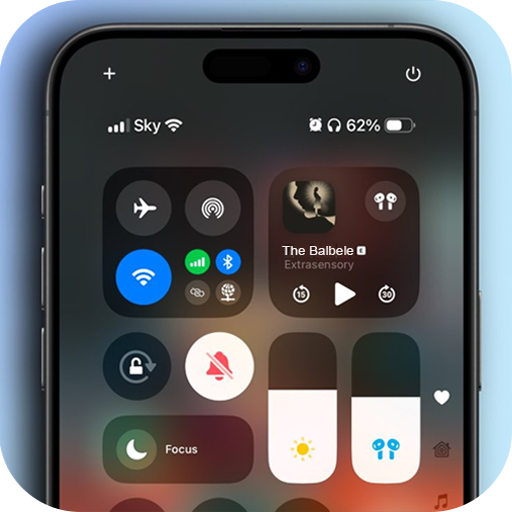
01
HW and drivers

02
Device platform
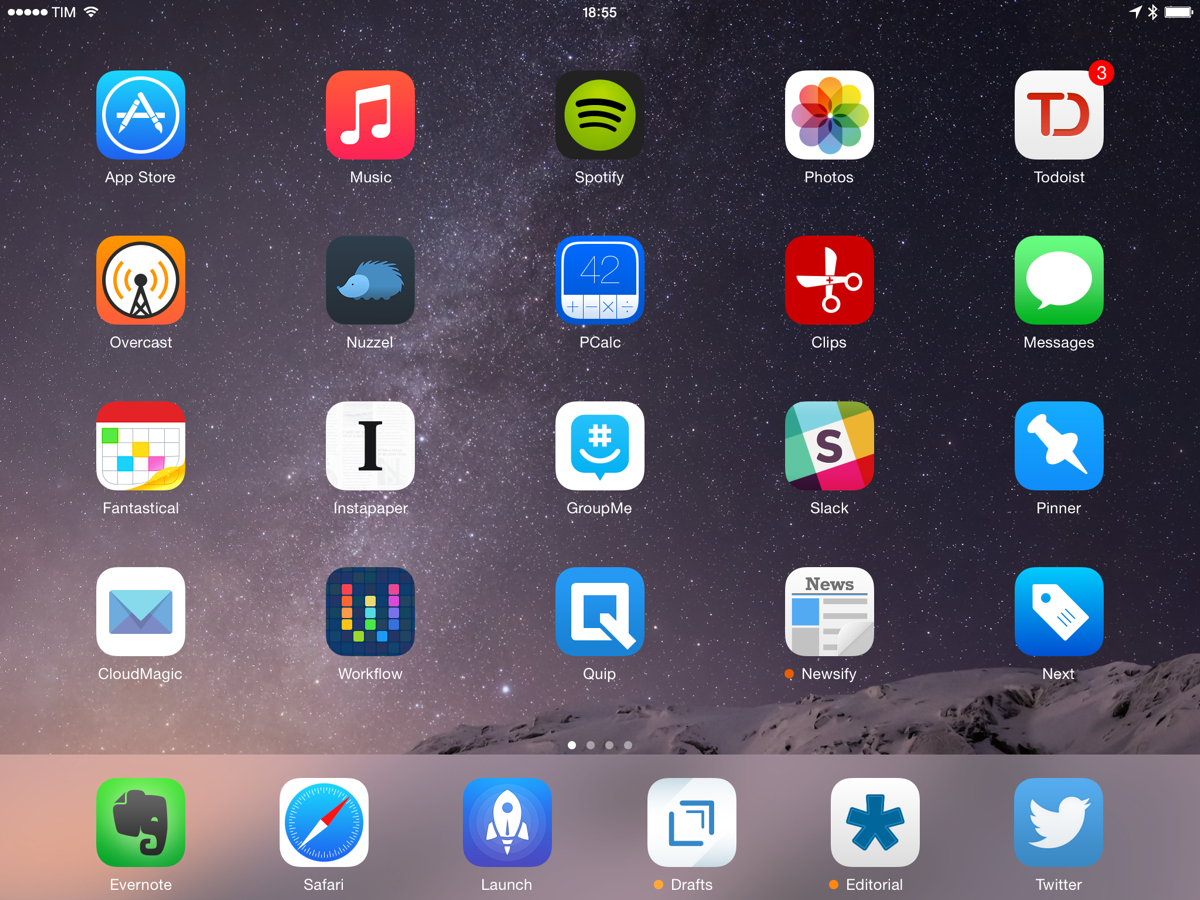
03
Installed app

Result
Usable app experience
Technologies
MINTROBOT technologies define how physical robot capability, control interfaces, system coordination, and deployment configuration become app-ready robot foundations for real operation.
The focus is not a single product shape. It is the architecture required to turn robotic capability into a configurable, validated, and application-ready deployable platform.
Technical background
A smartphone is not rebuilt for every app. The device exposes standard capabilities, an app defines what should happen, and the app connects to device resources through a defined system layer. Applying the same principle to robots is the core idea behind SDR, or Software-Defined Robotics.
HW and drivers
Device platform
Installed app
Usable app experience
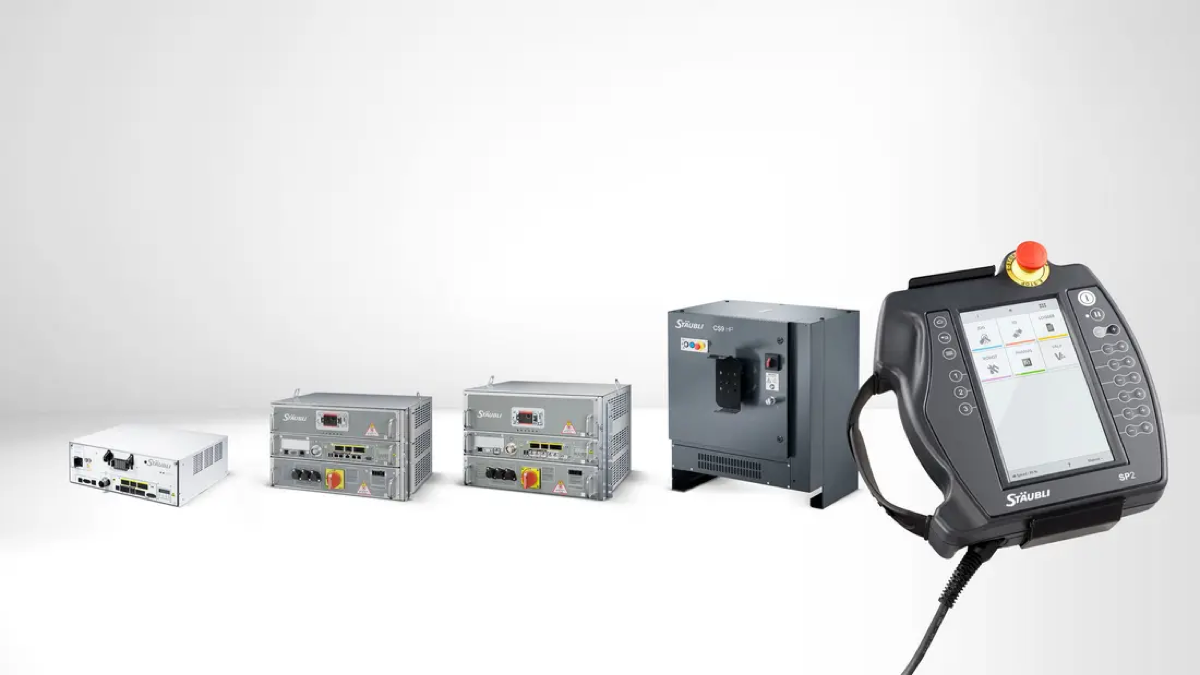
HW and controllers
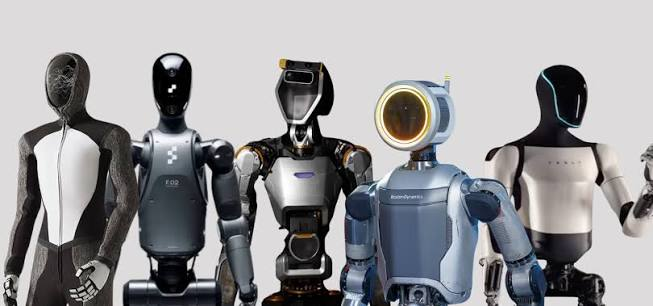
Robot platform
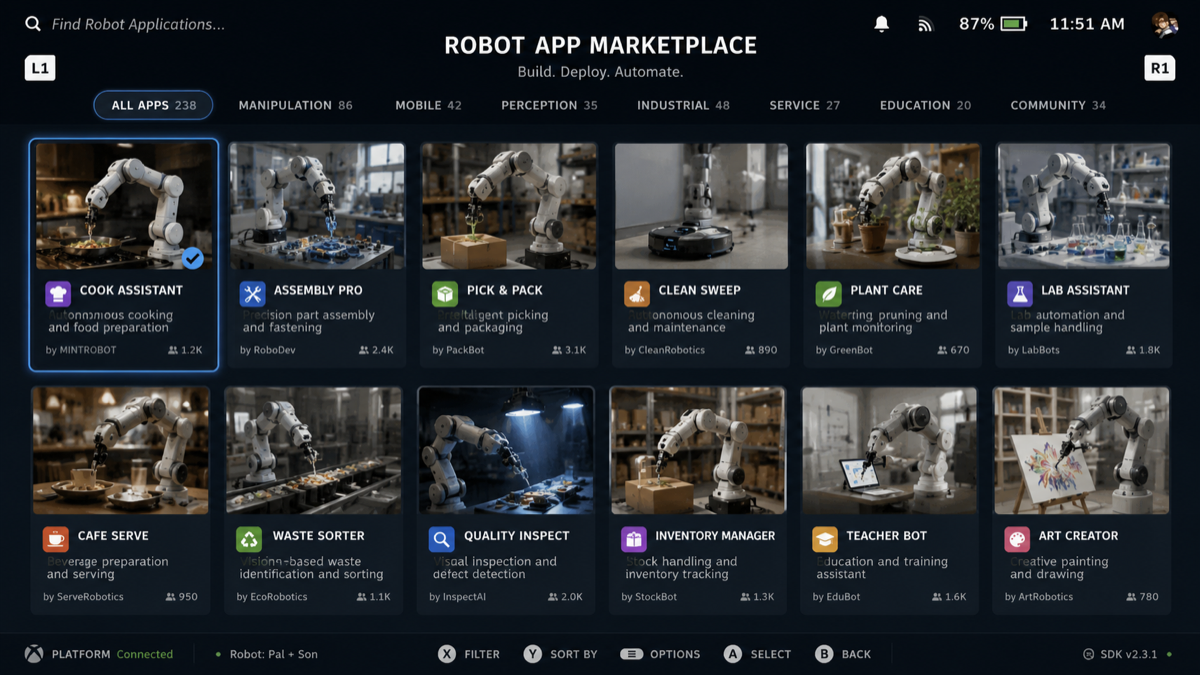
Installed app

Robot instance
Platform philosophy
The smartphone-like model only works when low-level robot resources can be organized into stable platform capabilities. Control APIs make motion, sensing, and device resources legible to the compound platform, while deployment definitions bind the resulting platform to applications and real and virtual resources.
01 / Control layer
Motion, manipulation, sensing, and device state are exposed through defined control interfaces so the compound platform can aggregate them into usable robotic capabilities.
02 / Compound platform
A compound platform reorganizes control resources into standardized capability surfaces, then adds vendor-specific modules and target assumptions to fit the intended platform purpose.
03 / Deployment
Deployment configuration binds the application, compound platform, controllers, sensors, hosts, and real and virtual resources into one defined robot instance.
Technology in practice
The model becomes practical only when the platform can be configured, validated, and bound to a target environment. In practice, MINTROBOT applies platform foundation engineering, control interface design, deployment binding, and simulation validation so app-capable foundations can move from concept to operation.
Platform engineering
Reach, height, payload class, mounting, workspace geometry, and service access are configured from the platform foundation.
Motion, manipulation, sensing, IO, and device state are prepared as controllable platform capabilities for application-level use.
Module choices, assembly assumptions, service access, and manufacturability are considered as part of deployable platform engineering.
Deployment model
Platform behavior is mapped into defined control, sensing, and device interfaces for application-level use.
Teleoperation, data collection, imitation learning, and task logic can connect through a clear system interface.
Reach, motion flow, module layout, sensor placement, and control assumptions can be checked before build decisions.
System architecture
Modern robotics development separates the platform from the application. The platform provides capability surfaces, while robot applications and AI workflows use those capabilities through defined interfaces instead of being tied to one fixed-purpose machine. This separation makes it practical to combine platform capabilities with AI technologies and build higher-performance robot instances without rebuilding the platform each time.
Modern robotics development workflow
App / platform / sim and real
01 / App layer
Robot Application / AI Logic
02 / Platform capability layer
Platform Foundation
Control modules are organized into compound platform capabilities, then prepared for a defined deploy target.
Control Modules
motion / manipulation / sensing
Compound Platform
capability surface / vendor modules
Deploy Target
target profile / controller bindings
03 / Deployment result
Simulation Environment
digital twin / simulation assets
03 / Deployment result
Real Environment
robot hardware / devices / sensors
Architecture result
MINTROBOT platforms are designed around this model, with defined control surfaces for motion, end-effector operation, sensing, workspace state, calibration, and deployment configuration. By leveraging Librux, a state-of-the-art runtime kernel for software defined robotics, MINTROBOT provides app-ready platform foundations that can connect applications to real and simulation environments through supported runtime and SDK workflows.
This platform architecture is grounded in years of real robotic hardware experience. See Company - Engineering Heritage for deployment records and historical robot arm projects.
Project fit